






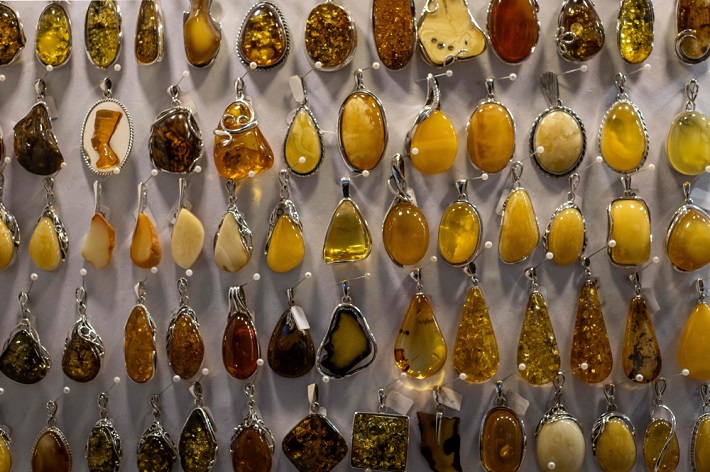
Once admired mainly for its warm golden glow and historical significance, amber is now being reimagined by a new generation of Polish designers who are blending tradition with cutting-edge technology to create contemporary jewellery.
At the Academy of Fine Arts in Gdansk, located in the Baltic coastal city of Gdansk—widely regarded as the world’s amber capital—students are experimenting with innovative techniques to transform this ancient fossil into modern statement pieces. By combining classic craftsmanship tools such as drills and sanders with advanced digital systems, young creators are pushing the boundaries of jewellery design.
Inside high-tech studios, virtual reality and digital modelling tools allow students to conceptualise and refine intricate designs before bringing them to life. For aspiring designer Martyna Golinska, mastering both creative and technical processes is key to innovation. She is particularly interested in CNC milling, a precision technology commonly used in industries like aerospace and medicine.
Her peer Paulina Smigiel highlights another challenge—translating artistic ideas into digital commands that machines can execute flawlessly. When successful, these techniques eliminate the need for further manual intervention, resulting in highly refined pieces.
From rings and necklaces to more experimental forms like masks and tiaras, designers are crafting jewellery that integrates amber with materials such as gold, silver and titanium. These creations—whether 3D-printed or machine-milled—stand in stark contrast to the traditional amber souvenirs long associated with Poland.
According to Zuzanna Franczak, a young instructor at the academy, students are encouraged to explore both established and emerging technologies, including artificial intelligence, to develop their own distinctive design language.
The results of this creative evolution are showcased in exhibitions, including displays at the Amber Museum along the Baltic coast, a region historically linked to the ancient Amber Road trade route. This route once carried “Baltic gold” to Mediterranean markets during classical antiquity.
Formed around 40 million years ago from tree resin, amber often contains preserved plant matter or insects, giving each piece a unique identity. Its cultural significance spans centuries, having been admired by figures such as Ovid, Nero and Pliny the Elder, while also holding symbolic and therapeutic value in regions like China and across the Muslim world.
Despite its deep-rooted heritage, today’s designers—such as student Dominika Afeltowicz—believe the future of amber lies in experimentation. By exploring new forms, textures and techniques, they aim to appeal to younger audiences seeking originality over tradition.
Guided by artist Slawomir Fijalkowski, students are encouraged to continuously evolve their approach, balancing innovation with craftsmanship. Whether destined for commercial markets or art galleries, these modern amber creations reflect a fresh vision—one that bridges ancient material with contemporary design.
Disclaimer: This information has been collected through secondary research and TJM Media Pvt Ltd. is not responsible for any errors in the same.