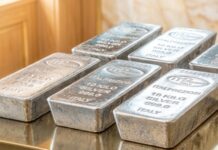











Often described as the “Cinderella” of precious metals, silver has a habit of arriving late to the party, stealing the spotlight briefly—and then vanishing just as quickly. Its latest price action has followed that script almost perfectly.
After surging to a record high of $121.6 per ounce on January 29, silver suffered a dramatic reversal, plunging by more than 25% in a single session the very next day. Triggered by technical selling and cascading stop-loss orders, the drop marked the steepest one-day decline in LSEG records going back to 1982.
The sell-off extended into the new week, with prices sliding a further 7% to around $78 per ounce. Market watchers warn that the correction may not be over, with several analysts pointing to a more sustainable price range of $60–70 based on fundamentals.
According to Ole Hansen, Head of Commodity Strategy at Saxo Bank, the rally was fuelled by an unprecedented surge in retail participation. He noted that the hunt for a price floor now depends largely on demand from China, a key buyer in recent months, and on a cooling of extreme volatility.
The sharp reversal followed weeks of cautionary signals from analysts who argued that silver’s rally had far outpaced underlying demand. Prices had already jumped 147% during 2025, setting the stage for an overheated market. Metals group Heraeus described January’s 71% spike before the crash as the most extreme move since 1980, when the Hunt brothers famously attempted to corner the silver market.
At the heart of the surge was retail FOMO, visible in booming demand for physical bars and coins. As silver broke through psychological milestones at $100 and then $120, social media platforms filled with celebratory posts showcasing private silver hoards.
The frenzy spilled into physical markets. In the US, online bullion dealer APMEX was overwhelmed by record buying and selling activity, prompting it to introduce minimum transaction limits in late January. In India, the world’s largest silver consumer, buyers rushed to secure coins and bars of every size, according to Chirag Thakkar, CEO of Amrapali Group Gujarat.
Conspiracy theories added further momentum at the rally’s peak. Long-running claims that banks suppress silver prices through “paper contracts” resurfaced with renewed intensity, alongside fresh misinformation around a routine Chinese commerce ministry document. Social media falsely framed it as evidence of new export restrictions, despite it merely relating to licence processing for 2026–27—a rumour that spread so widely it continues to be repeated inaccurately by some AI platforms.
Adrian Ash, Head of Research at BullionVault, noted that such narratives are a recurring feature of the silver market, often re-emerging during periods of sharp price appreciation. He described repeated predictions of an imminent collapse in the global paper silver system as a constant backdrop to silver bull runs.
Silver’s resurgence was also driven by its growing presence in meme culture, blending precious metals with crypto-style storytelling. Michael Widmer, strategist at Bank of America, said silver’s “memefication” has evolved from Reddit-driven squeeze attempts into narratives casting it as the original decentralised currency—parallels that amplified speculative enthusiasm.
While Widmer estimates that continued retail buying could theoretically have pushed silver as high as $170 by 2027, he places fair value closer to $60 per ounce. Rhona O’Connell of StoneX, who coined the “Cinderella” label decades ago, points to key technical support near $66 based on Fibonacci levels.
Her warning remains unchanged. Silver’s dramatic rises, she cautioned, are often followed by equally brutal falls—and the signs of excess, this time, were hard to miss.
Disclaimer: This information has been collected through secondary research and TJM Media Pvt Ltd. is not responsible for any errors in the same.