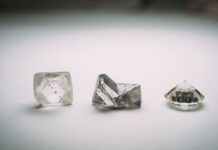







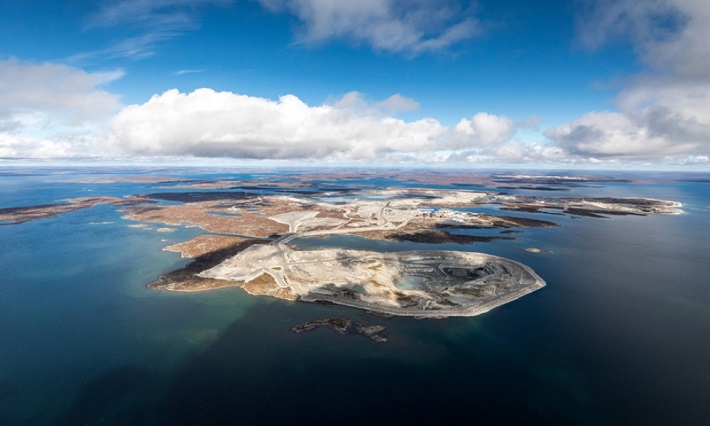
Rio Tinto has officially brought production to a close at the Diavik Diamond Mine, ending a 23-year chapter that yielded more than 150 million carats of rough diamonds and helped establish Canada as a major player in the global diamond industry.
Located beneath Lac de Gras, roughly 220 kilometres south of the Arctic Circle, the mine was first discovered in 1991 and began operations in 2003. Over its lifespan, Diavik developed four kimberlite pipes using a combination of open-pit and underground mining techniques, producing predominantly high-quality white diamonds along with a limited number of rare yellow stones.
Sophie Bergeron, Managing Director for Rio Tinto’s diamonds business, reflected on the milestone, noting that the project required long-term vision and resilience to operate in one of the world’s most remote and environmentally sensitive regions. She emphasised that Diavik’s impact extends far beyond production, shaping global perceptions of Canadian diamonds.
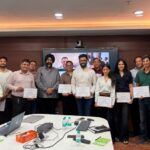
The closure was marked by a ceremony attended by Indigenous leaders, government representatives and industry stakeholders, recognising the collaborative framework that underpinned the project. Matthew Breen described the mine as a defining success story for Canada’s North, highlighting its role in delivering long-term socio-economic benefits through partnerships with Indigenous communities.
With production now complete, Rio Tinto will shift focus to site rehabilitation and environmental restoration. Closure planning has been in place since before operations began, covering areas such as land use, water management, biodiversity and community transition. Rehabilitation efforts are expected to continue through 2029, followed by extended monitoring.
Although mining has ended, Diavik’s final output will continue to enter the market, with rough diamonds set to be polished and sold through 2026 and beyond via Rio Tinto’s global customer network.
The closure of Diavik marks the end of a significant era, leaving behind a legacy of innovation, partnership and sustainable mining practices in one of the world’s most challenging environments.
Disclaimer: This information has been collected through secondary research and TJM Media Pvt Ltd. is not responsible for any errors in the same.